
Equity indices frittered away a good start to close with modest losses on Monday, pressured by heavy selling in metal stocks after the government imposed export duties on steel-making raw materials to curb soaring prices. The 30-share BSE Sensex opened strong and gained momentum as the session progressed, but came under severe selling pressure in afternoon trade to close 37.78 points or 0.07 per cent lower at 54,288.61. On similar lines, the broader NSE Nifty slipped 51.45 points or 0.32 per cent to end at 16,214.70.

Equity markets will look for directions from global trends, ongoing quarterly earnings and investment patterns of foreign institutional investors (FIIs) in a holiday-shortened week ahead and may encounter volatility amid the scheduled monthly derivatives expiry, according to analysts. Equity markets will remain closed on Wednesday on account of 'Republic Day'. "This week is a holiday-shortened one and it's going to be critical due to the list of events and data that are lined up.

Investors' wealth on Thursday tumbled over Rs 2.81 lakh crore as stocks declined in line with selloff in global equities. The 30-share BSE benchmark index tanked 581.21 points or 1 per cent to settle at 57,276.94. During the day, it cracked 1,418.79 points to 56,439.36. In tandem with weak trend in equities, the market capitalisation of BSE-listed firms tanked Rs 2,81,147.38 crore to Rs 2,59,97,419.48 crore.

'The correction could take two to three months and traders need to be careful.' 'For investors, this could be a good time to nibble in.'

Investors' wealth tumbled over Rs 2.58 lakh crore on Monday as equity markets suffered a heavy sell-off, with the Sensex plunging 2 per cent. The BSE benchmark tanked 1,172.19 points or 2.01 per cent to settle at 57,166.74 after a weak opening. During the day, it plummeted 1,496.54 points or 2.56 per cent to 56,842.39. Tracking the weak trend in equities, the market capitalisation of BSE-listed firms tumbled by Rs 2,58,855.59 crore to stand at Rs 2,69,44,207.98 crore.

This rise was spurred by record kharif sowing - after a good rabi season - that ensured high disposable incomes in rural India.

Market benchmark BSE Sensex rallied 635 points to 59,942 in the opening trade of the special Muhurat session on Monday to mark the beginning of Hindu Samvat year 2079. The 30-share index was trading higher by 635.12 points, or 1.07 per cent, at 59,942.27 in the first few minutes of trade. Similarly, the broader NSE Nifty surged 192.20 points or 1.09 per cent to 17,768.50.

The third-quarter financials didn't excite market watchers. But equity investors can still make money if they invest in the right stocks.

Leading carmakers Maruti Suzuki, Hyundai and Tata Motors reported robust dispatches to dealers in May on the back of strong demand for passenger vehicles across regions, even as the global semiconductor shortage continued to impact production. Mahindra & Mahindra, Kia India, Toyota Kirloskar Motor, Honda Cars and Skoda also witnessed strong demand for their models last month. The month of May also witnessed Tata Motors race ahead of Hyundai in terms of domestic wholesales.

Equity indices nursed losses for the second consecutive session on Tuesday as investors continued to dump IT, banking and FMCG stocks amid a bearish trend in global markets. Unabated foreign fund outflows and the rupee dropping to another record low against the US dollar added to the woes, traders said. Participants were also in wait-and watch mode ahead of release of retail inflation and factory output data.

India's traditional companies are now moving full scale into the renewable and alternative energy space that had been dominated by smaller players over the past decade. Companies such as government-owned NTPC and the Adani and the Tata groups restructured their businesses well in time to become major players in the green space. At the same time, other conventional companies, such as Larsen & Toubro and Reliance Industries Ltd (RIL), which have a presence both in the energy sector as well as myriad other activities - construction, technology and retailing - are tying up with new-age companies to hitch a ride to a greener path.

The overall volume at India's top four M&HCV makers - Tata Motors, Ashok Leyland, Volvo Eicher, and Mahindra & Mahindra - fell 59.5 per cent to 31,067 units during the month.

Bajaj Finance was the top gainer in the Sensex pack, surging around 5 per cent, followed by Bajaj Finserv, HDFC, Tech Mahindra, HDFC Bank, UltraTech Cement and Tata Steel. On the other hand, HUL, Nestle India, ICICI Bank, Axis Bank, SBI, TCS and ITC were among the laggards.

Private sector lender Kotak Mahindra Bank will handle the salary account of the Indian army personnel, the bank said on Thursday. The bank has signed a memorandum of understanding (MoU) with the Indian Army for salary account. The MoU enables Kotak to offer its salary account proposition, combined with exclusive benefits for the Indian Army, to all army personnel - both active and retired, Kotak said in a release.

Infosys on Thursday posted a 7.8 per cent year-on-year rise in consolidated net profit at Rs 6,128 crore in March quarter of FY23, and gave 4-7 per cent revenue growth forecast for FY24 amid macro economic uncertainities. The net profit (after minority interest) stood at Rs 5,686 crore in the fourth quarter of FY22. Seen sequentially, the net profit for Q4 came in 7 per cent lower.

IndusInd Bank was the top gainer in the Sensex pack, rising around 2 per cent, followed by Axis Bank, HDFC, ICICI Bank, HDFC Bank, Kotak Bank and SBI. On the other hand, ONGC, Tech Mahindra, NTPC, Sun Pharma and TCS were among the laggards.

Investors' wealth on Tuesday jumped by over Rs 2.51 lakh crore, in tandem with a sharp recovery in equities after four days of heavy declines. The 30-share BSE Sensex opened on a weak note and tumbled 581.93 points or 1.10 per cent to 52,260.82 during the day amid firming oil prices and relentless selling by foreign institutional investors. Amid bouts of volatility, the benchmark touched a high of 53,484.26 and a low of 52,260.82 during the trade. It finally settled at 53,424.09, higher by 581.34 points or 1.10 per cent.

The 30-share BSE benchmark jumped 533.74 points or 0.91 per cent to 59,299.32. During the day, it zoomed 783.24 points to 59,548.82.

Equity indices chalked up losses for the second straight session on Monday, in tandem with a bearish trend overseas as ratcheting up of hostilities in Ukraine and prospects of further rate hikes by the US Fed soured global risk sentiment. The rupee slipping to another all-time low against the US dollar amid foreign fund outflows added to the gloom, traders said. After tumbling over 800 points in intra-day trade, the 30-share BSE Sensex clawed back some lost ground to end 200.18 points or 0.34 per cent lower at 57,991.11.

'As our per capita income increases and various demographic segments emerge, the need for various kinds of protection and risk covers will become even more explicit.'

Top gainers in the Sensex pack included Vedanta, Tata Steel, Yes Bank, Tech Mahindra, Hero MotoCorp, Bharti Airtel, SBI and Bajaj Finance and IndusInd Bank, which rose up to 4.83 per cent.

Investors became poorer by over Rs 4.47 lakh crore on Friday as markets faced severe drubbing, mirroring weak trends in global equities. The 30-share BSE benchmark dived 866.65 points or 1.56 per cent to settle at 54,835.58. During the day, it tumbled 1,115.48 points or 2 per cent to 54,586.75.
Equity investors became poorer by over Rs 9.75 lakh crore in two days of heavy decline in the equity market, with the Sensex plunging 1,457 points on Monday. The 30-share BSE benchmark tanked 1,456.74 points or 2.68 per cent to settle at 52,846.70 on Monday. It had ended 1,016.84 points or 1.84 per cent lower at 54,303.44 on Friday.

Earlier in May, Ford India announced that it had dropped its plans to make electric vehicles (EVs) in India, which it intended to export, under the production-linked incentive scheme (PLI). Ford was among 20 companies that had signed a Champion OEM Incentive Scheme under the PLI project with the government in February this year. The decision comes as a blow for the 4,000-odd employees at Ford India's Maraimalai Nagar plant near Chennai and in Sanand, Gujarat. In September last year, the company had announced that it would exit the India market, which it had entered in 1995 through an on-again, off-again joint venture with Mahindra & Mahindra (they split in 1998, signed a JV in 2019 and split again in December 2020), retailing petrol and diesel brands such as the EcoSport, Figo, Aspire, and Endeavour.

A lot of mid and small-caps are in the bubble zone and command high valuation and have corrected sharply.
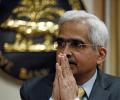
The RBI's rate-setting panel MPC on Monday began its three-day deliberation amid expectations of another round of hike in benchmark interest rates to contain inflation that continues to remain above the central bank's upper tolerance level. RBI Governor Shaktikanta Das will announce the decision of the Monetary Policy Committee after deliberations on Wednesday. Das has already indicated that there may another hike in the repo rate, though he refrained from quantifying it.
Benchmark indices Sensex and Nifty retreated from over one-week highs to close lower on Wednesday due to profit booking in banking, IT and metal stocks amid weak global trends. After a two-day rally, the 30-share BSE Sensex dropped by 90.99 points or 0.16 per cent to settle at 57,806.49 in volatile trade. As many as 19 of its constituents declined while 11 advanced. The broader Nifty slipped by 19.65 points or 0.11 per cent to close at 17,213.60 with 31 of its stocks ending in the red.

You will come across many a hurdle while purchasing a used car. That, however, cannot keep you away from realising your dream.

For automakers, the festive season is about raking it in through ramped up sales and attractive consumer offers. However, despite the robust demand, what may spoil the party this year is a global shortage of semiconductors.

Titan was the top laggard in the Sensex pack, shedding 1.39 per cent, followed by HDFC, Axis Bank, Kotak Bank, HCL Tech and Tech Mahindra. On the other hand, Asian Paints, SBI, M&M, TCS, Bajaj Finserv and ICICI Bank were among the winners, spurting as much as 3.25 per cent.

Since April, India has seen multiple strains of the coronanavirus sweep the nation, upending life and businesses alike. Out-of-home retail and discretionary categories such as durables, auto, fashion, lifestyle, hospitality, food services, travel, and tourism have been the worst-hit as Covid cases remain high, leaving state governments with no option but to curtail mobility and economic activity.

Titan was the top loser in the Sensex pack, shedding over 3 per cent, followed by M&M, HUL, Maruti, Asian Paints and IndusInd Bank. Nifty fell 91 points to 17,157.40.

It won't be easy for the banking sector to better its performance every quarter, predicts Tamal Bandyopadhyay.

Shares of Yes Bank may face selling pressure as the Reserve Bank-mandated three-year lock-in period for individual investors and exchange-traded funds is ending on Monday, according to analysts. The analysts expect distress on the bank counter on Monday as they expect investors, primarily the nine banks led by State Bank, which picked up almost 49 per cent of its stocks in March 2020 for Rs 10 per share -- at a premium of Rs 8 on the face value as part of the RBI bailout, making an exit. Exchange-traded funds are also likely to press the exit button.

Passenger vehicle market leaders Maruti Suzuki and Hyundai on Saturday reported a decline in wholesales in December 2021, although homegrown majors Tata Motors and Mahindra & Mahindra reported growth, amid semiconductor shortage continuing to impact production. Other manufacturers Nissan and Skoda also reported an increase in December 2021 sales although Honda Cars India witnessed a decline last month. The country's largest carmaker Maruti Suzuki India (MSI) reported a 4 per cent fall in wholesales to 153,149 units in December 2021 as against 160,226 units a year ago.

Low home loan rates by banks could put large players in an advantageous position over smaller non-bank players, believe analysts.

Maruti's compact segment comprising New WagonR, Swift, Celerio, Ignis, Baleno, Dzire, and utility vehicles, including Gypsy, Ertiga, XL6, S-Cross and Vitara Brezza saw robust sales, while the mini segment comprising Alto, S-Presso and Old WagonR saw negative growth.

The first leg of the 35-day festive period, which ended with Dussehra, failed to bring any cheer for auto companies. While makers of passenger vehicles struggled to meet demand due to the persistent shortage of semiconductors, a recovery in demand remained elusive for two-wheeler manufacturers despite offers and schemes. The overall season, which ends two days after Diwali, is unlikely to bring any turnaround in either the supply or the demand scenario, said dealers and officials at auto companies.

Reliance Industries Ltd, the country's largest company by revenues, profits and market value, has topped Indian corporate in the World's Best Employers rankings 2021 published by Forbes. Reliance was placed at 52 in the overall ranking of 750 global corporates likes Phillips, Sanofi, Pfizer and Intel. Other Indian names in the top 100 rankings were ICICI Bank at 65, HDFC Bank at 77 and HCL Technologies at 90, according to the Forbes ranking.
